
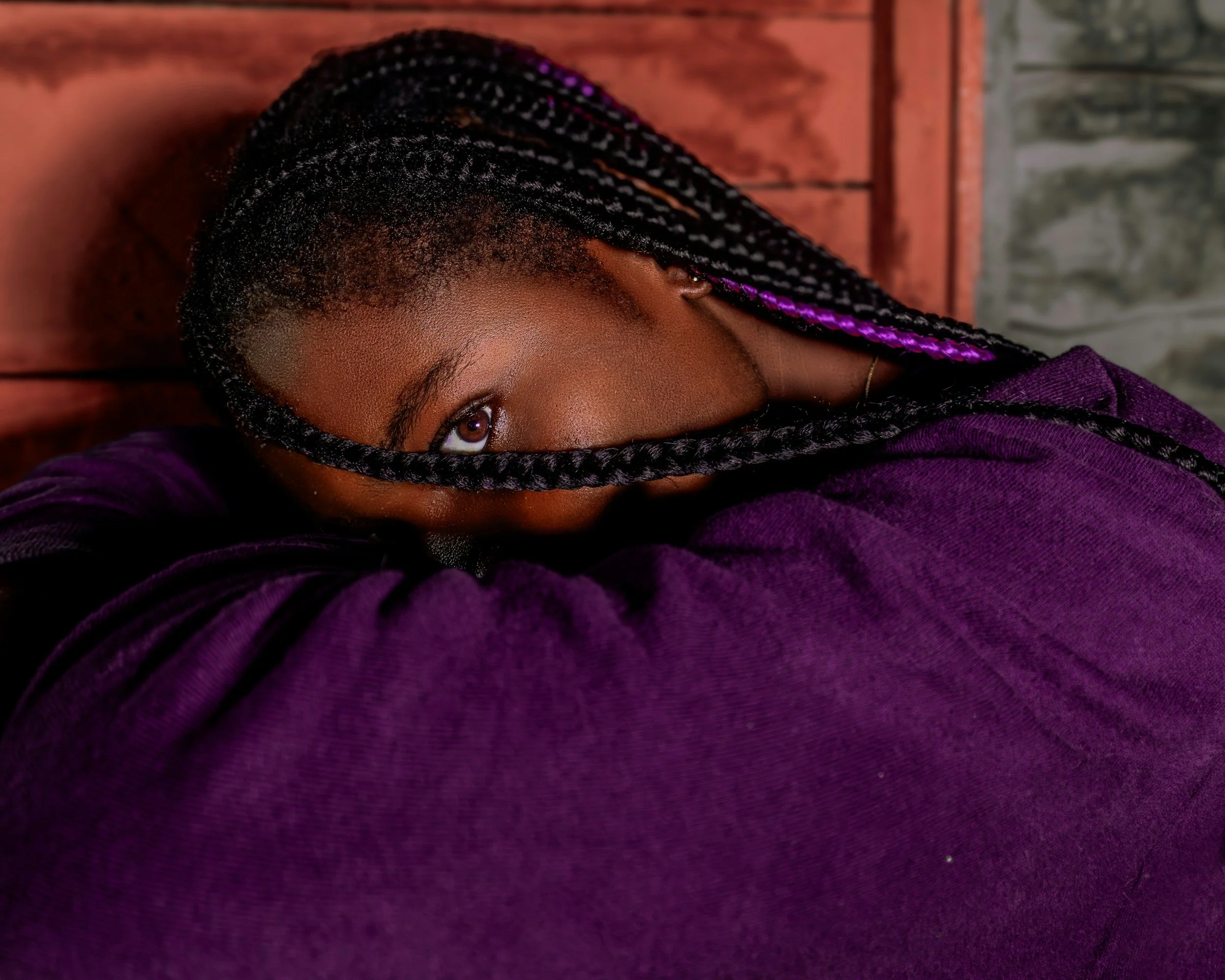
When Being Seen Hurts:
Learning to Receive
Attention Without Bracing
There is a particular kind of exhaustion that comes from being seen too early, too often, and in the wrong ways.
I became aware of my body in fifth grade. I was pretty. I had a big ass. And from that moment on, attention arrived before consent. Some of it came from classmates, which was confusing but manageable. Too much of it came from grown men, which was not. And instead of protection, the women in my life handed me shame.
Cover up.
Don’t draw attention.
Make yourself smaller.
Their fear wrapped itself around my body and stayed.
Over time, I learned that visibility had a cost. That being perceived meant being evaluated, sexualized, corrected, or blamed. I learned that my body could derail rooms, disrupt worship, and invite discipline—not because I was doing anything wrong, but because other people didn’t know how to manage themselves.
There is one moment that still sits heavy in my spirit.
I was an adult, working in the media ministry at church. I was on an elevated platform, filming during praise and worship. Music has always lived deep in my body. I don’t just hear it—I respond to it. So I was dancing while doing my job. Worshiping. Fully present.
A security guard approached me and said, “You know you can’t be up here dancing.”
What he didn’t say—but meant—was:
Your body is distracting. Your joy is inappropriate. Your ass is the problem.
I had to stop praising God because my body made other people uncomfortable.
That moment taught me something dangerous:
That my embodiment was a liability.
That my joy needed supervision.
That being seen was unsafe.
To this day I hate attention. Not because I don’t want to be admired—but because admiration so often comes tangled with entitlement, shame, or control. People aren’t engaging with me as a human being. They ware engaging with me as something to conquer, humble, or manage.
So I learned to brace.
What bracing actually is
Bracing is what happens in the body when attention arrives and your nervous system says: This could cost me something.
It looks like:
Tight shoulders
Shallow breath
A polite smile that feels frozen
Over-explaining
Deflecting compliments
Performing ease while scanning for danger
Bracing is not a flaw.
It is a learned survival response.
But here’s the thing I’m learning now:
Not all attention is violent.
Not all attention is extractive.
And I deserve to experience respectful attention without armor.
Receiving attention without yielding yourself
The work is not about becoming more confident or less sensitive. It’s about learning how to receive without surrendering.
That looks like:
Pausing instead of deflecting
Letting kind words land without rushing past them
Saying “thank you” and stopping there
Allowing attention to pass through instead of lodging in my body
It means teaching my nervous system a new equation:
Attention does not automatically mean danger.
Being seen does not require me to give something up.
I’m learning to separate attention from access.
Someone can notice me without owning me.
Someone can admire me without touching me.
Someone can see me without reducing me.
And most importantly:
I can stay inside myself while being witnessed.
Reclaiming my body from symbolism
For so long, my ass has carried other people’s projections:
Desire
Shame
Fear
Religious control
Moral panic
I’m slowly taking all of that off.
My body is not a distraction.
It is not a responsibility.
It is not a public negotiation.
Sometimes healing doesn’t look like celebration.
Sometimes it looks like neutrality.
Like letting my body simply be—without commentary, without management, without story.
If visibility is coming, grounding must come first
I feel myself moving toward greater visibility. A larger voice. A wider audience. And I know attention will come like a wave.
My work now is not to outrun it or disappear beneath it.
My work is to become anchored enough to stand.
To be heavy in my body.
Clear in my boundaries.
Gentle with my nervous system.
To know that I can be seen without being consumed.
And to remember this, always:
I do not need to disappear to be safe.
I do not need to harden to be powerful.
I decide what attention means to me.