
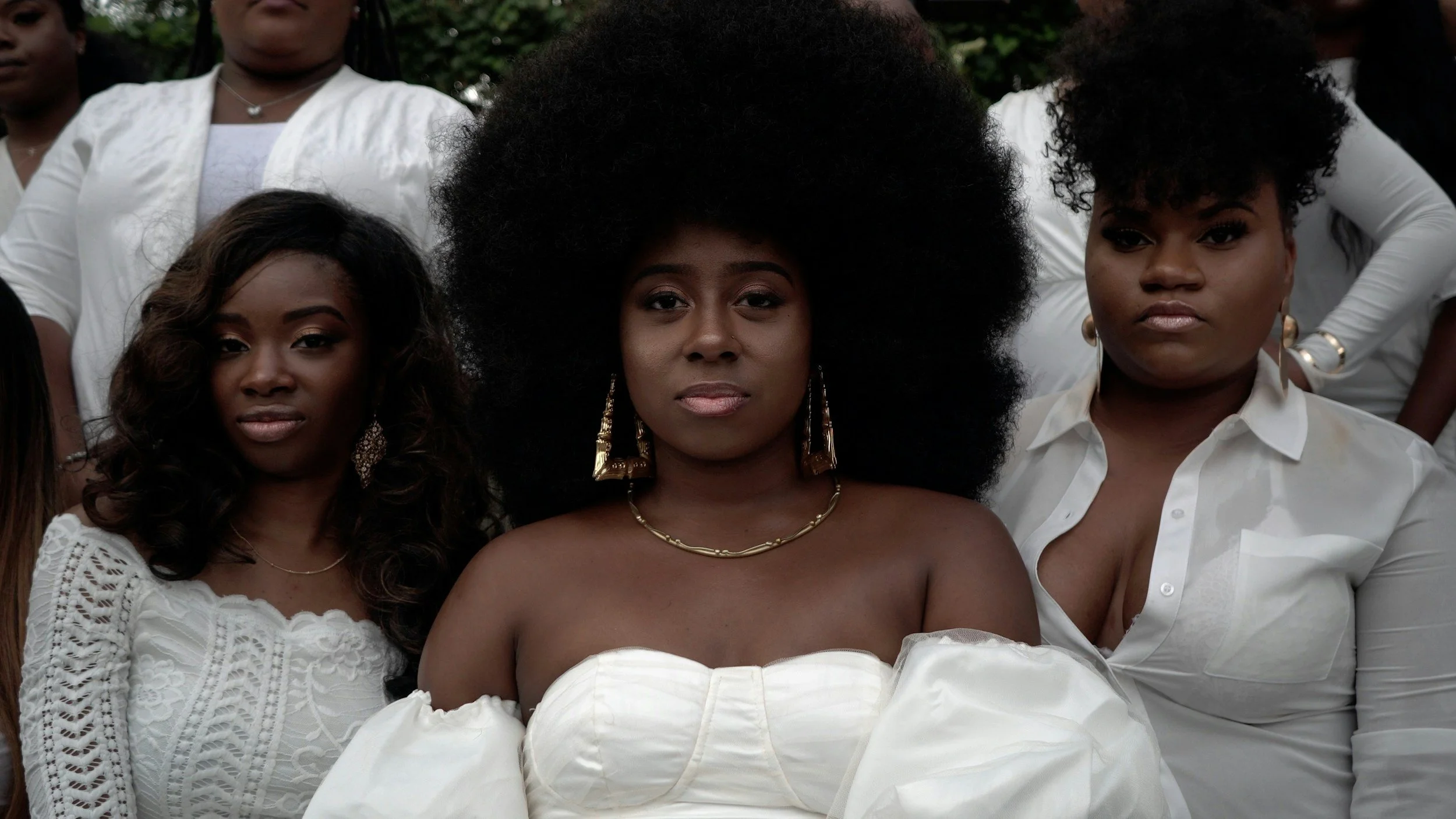
When Black Women
Chose Themselves
(A Historical Reckoning)
For nearly a century after emancipation, domestic service was the primary occupation available to Black women in the United States. By 1900, roughly one in three employed Black women worked in white households as cooks, maids, laundresses, or nannies. In the South, that number was even higher. Domestic labor was not simply “work”; it was the afterlife of slavery—racialized, feminized, intimate, and largely unprotected by law.
Black women were expected to raise white children while their own were left unattended. They cooked meals they could not sit down to eat. They cleaned homes they could never rest in. Wages were low or inconsistent, hours were undefined, and sexual harassment was common and rarely punished. Domestic workers were excluded from many early labor protections, including minimum wage laws and Social Security under the New Deal—exclusions that were intentional, designed to preserve the Southern racial labor order.
This work was framed as “natural,” “loving,” or “family-like,” but it offered no security, no advancement, and no dignity. You could give a household decades of your life and leave with nothing—not even acknowledgment that your labor had held the family together.
And yet, Black women endured—not because the work was acceptable, but because choice was constrained.
Why Black women left domestic servitude
Black women did not leave white households for a single reason. They left because the conditions became unbearable and alternatives—however limited—became possible.
Historically, Black women exited domestic service because:
The work was economically exploitative
Domestic workers were often paid less than industrial or service jobs and had no guarantees of hours, raises, or retirement.The labor was totalizing and invasive
Live-in arrangements erased boundaries. Employers controlled time, movement, behavior, and sometimes access to one’s own children.Sexual violence and harassment were widespread
Black women working in white homes were uniquely vulnerable, with little legal recourse.There was no upward mobility
Decades of service did not translate into stability, savings, or generational security.The Great Migration created alternatives
Between 1916 and 1970, millions of Black families moved to Northern and Western cities. Factory work, hospital jobs, hotel work, clerical roles, and service-sector employment—while still racist and exploitative—offered wages, defined shifts, and the ability to go home.World War I and II disrupted labor markets
Labor shortages forced industries to hire Black women outside domestic roles. Once alternatives were experienced, many refused to return.Collective refusal took hold
Black women quit quietly, set boundaries, rejected live-in arrangements, and chose instability over humiliation. This was not always protest—it was discernment.
Leaving domestic service did not mean leaving care work entirely. Black women continued to dominate nursing aide roles, childcare, hospitality, and service labor. What changed was the degree of control employers had over their lives.
This mass withdrawal reshaped American life.
What filled the gap Black women left behind
When Black women left white households, the country did not meaningfully redistribute domestic labor or interrogate who had been carrying it. Instead, capitalism moved quickly to preserve comfort without accountability.
The mid-20th century saw the rapid rise of:
processed and convenience foods
household appliances marketed as “time-saving”
disposable diapers and paper goods
institutional childcare and after-school programs
parenting manuals and expert-driven childrearing culture
What had once been relational, embodied labor was deskilled, mechanized, and sold back to households. The goal was not equity—it was efficiency. America kept the lifestyle it had grown accustomed to. It simply replaced Black women with products, machines, and paid institutions.
This is rarely framed as a consequence of Black women choosing themselves—but it was.
Their refusal exposed a truth the country did not want to face: American domestic life had never been self-sustaining. It had been propped up by racialized labor that was invisible until it withdrew.
And now, we are here again
In this current moment—marked by political regression, economic precarity, and institutional hostility—Black women are once again stepping back. After the election of Trump’s second term, many Black women disengaged from workplaces, scaled back participation, or exited the job market entirely.
Not because they lacked ambition.
But because the bargain was bad.
Today’s economy offers:
stagnant wages
rising costs of living
racial and gender hostility
eroding protections
and a demand for emotional labor without safety or reciprocity
This time, there is no factory boom waiting. Fewer off-ramps. More instability. And still, Black women are choosing themselves—often with even less margin than before.
That is not apathy.
It is lineage.
Black women have always understood something America resists acknowledging: stability that requires self-erasure is not stability at all. And when institutions refuse to change, withdrawal becomes wisdom.
History shows us this clearly: when Black women choose themselves, the world rearranges—markets shift, systems scramble, narratives panic. But that choice is not destructive. It is generative.
It is how futures are made.
To face uncertainty rather than submit to harm is not weakness—it is vision. And Black women, again and again, have shown a willingness to step into the unknown when the cost of staying is too high.
That is not quitting.
That is inheritance.