
Standing Rock is in Your Backyard
Author’s Note
I wrote part of this (Original Post) in 2016/2017 when Standing Rock was receiving national coverage. I am updating it today because the relevance is undeniable.
One Sunday long ago, I attended New Community Covenant Church in Bronzeville. The Associate Pastor, Michelle Dodson, gave a sermon on a subject I had never heard discussed in church: Creation Care.
Not metaphorical creation care.
Not abstract creation care.
Land. Water. Air. Bodies. Neighborhoods.
It was a sermon about responsibility.
And it made something click.
Because when people talk about environmental injustice as if it’s far away—some pipeline protest, some poisoned river on the news—I want to say this plainly:
You don’t have to go to Standing Rock to see environmental injustice.
Sometimes it’s already in your backyard.
Chicago Has Its Own Sacrifice Zones
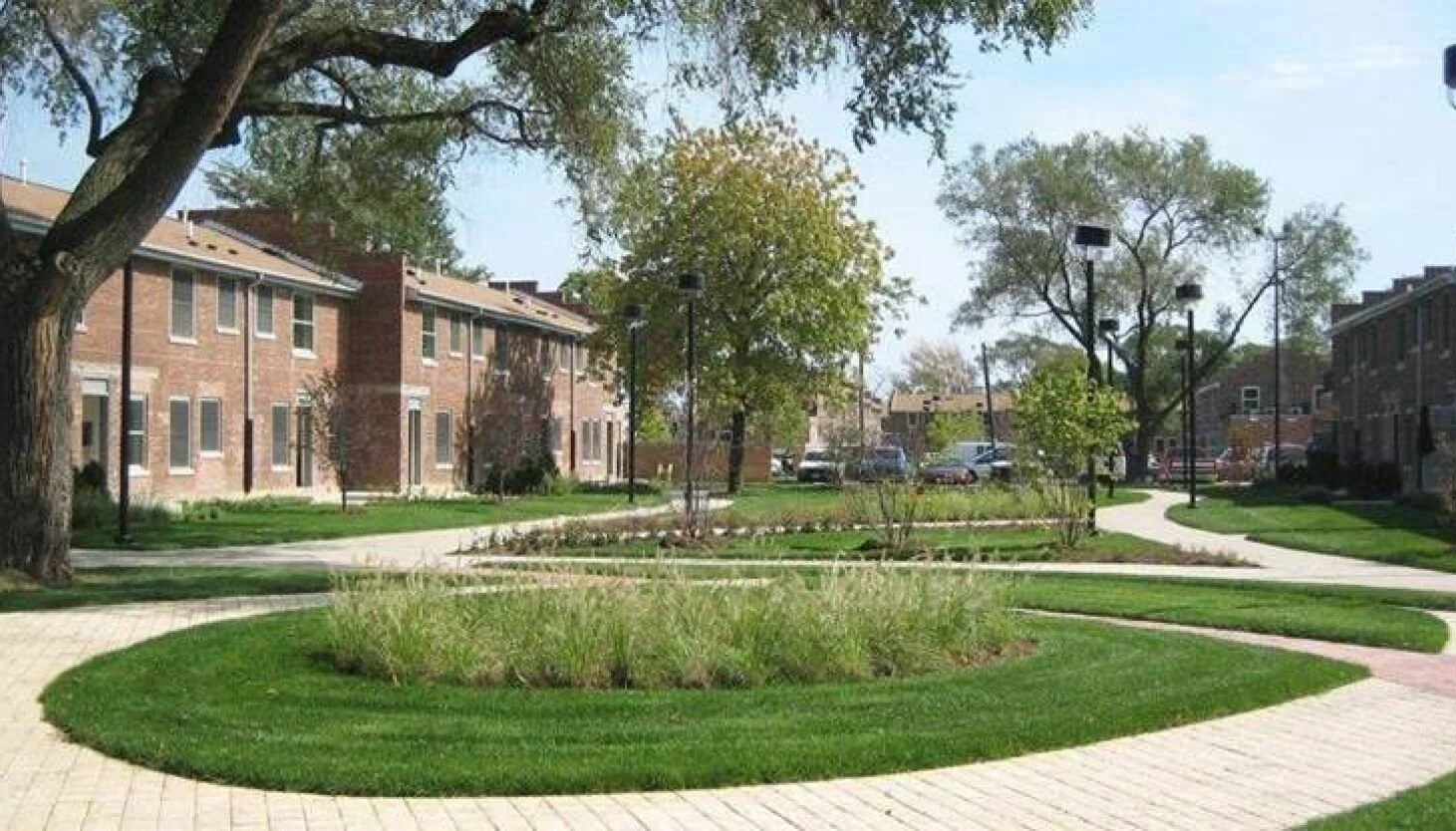
On the far South Side of Chicago sits Altgeld Gardens, a public housing development built in the mid-1940s to house Black veterans returning from World War II.
From the beginning, Altgeld existed inside an industrial corridor—near landfills, factories, storage tanks, and polluted waterways. Residents and organizers have long described the area as a “toxic doughnut”: a community surrounded by environmental hazards.
This framing didn’t come from theory.
It came from lived experience.
higher asthma rates
respiratory illness
cancer clusters
generations forced to be “resilient” to survive where they lived
Altgeld Gardens is not an accident.
It is policy, zoning, and neglect made physical.
Environmental Racism Isn’t Mysterious — It’s Patterned
Let’s ask the questions people avoid:
Why are hazardous facilities so often placed near Black and low-income neighborhoods?
Why do remediation efforts move slowly when the affected residents lack political power?
Why is illness treated as unfortunate instead of unacceptable?
Environmental racism rarely looks like overt hatred.
It looks like patterns:
flexible zoning
weak enforcement
ignored complaints
delayed action
and profits prioritized over people
When this happens consistently, it stops being coincidence.
Altgeld Gardens became one of the birthplaces of Chicago’s environmental justice movement precisely because residents refused to accept that sickness was the cost of survival.
The Earth Remembers What We Try to Bury
One of the most dangerous myths about pollution is that it disappears when a site “closes.”
Many industrial chemicals—such as DDT and its related compounds—are persistent. They remain in soil, sediment, and ecosystems for decades. Closing a landfill doesn’t undo what has already leached into the land and water.
And harm is rarely singular.
It is cumulative:
air + water + soil
stress
underfunded healthcare
political neglect
Bodies don’t experience pollution in neat categories.
They experience it all at once.
A Spiritual Problem Disguised as an Economic One
Genesis is often quoted to justify domination. But dominion was never meant to mean destruction without accountability.
If Creation is sacred, poisoning it is not neutral.
If human life has value, sacrifice zones are a moral failure.
Even outside of faith, the ethical logic stands:
If a system requires some communities to be sick so others can be comfortable, that system is broken.
Slow violence is still violence—especially when it is legal.
Where Are We Now?
How Environmental Protections Have Been Gutted Since 2016
Since Donald Trump’s election in 2016, environmental protections in the United States have been systematically weakened through a combination of:
repeated budget cut proposals
staffing attrition
deregulation
weakened enforcement
Even when Congress blocked some proposed cuts, real damage occurred through leadership priorities and institutional erosion.
EPA workforce data shows a clear decline from 2017 through 2020, reducing the agency’s ability to enforce environmental laws and protect vulnerable communities.
While later administrations attempted to rebuild capacity and explicitly elevate environmental justice, that progress has been fragile.
By 2025, environmental justice infrastructure itself became a target:
offices dismantled
staff placed on leave
enforcement capacity threatened again
Environmental protection has become a political football—while Black and Brown communities continue paying the health cost of every kick.
Visibility does not equal safety.
The New Standing Rock: AI Data Centers in Black and Brown Communities
Environmental racism didn’t end.
It changed industries.
Today, one of the clearest examples is the rapid expansion of AI data centers—massive facilities requiring enormous energy, water, and often on-site fossil fuel generation.
Boxtown, Memphis
In South Memphis, near Boxtown, a historically Black community already burdened by industrial pollution, a massive AI supercomputer complex powering Elon Musk’s AI operations has drawn national attention.
Investigations and legal actions allege:
dozens of methane gas turbines
operations without proper air permits
increased smog-forming pollution
added burden to an already over-polluted community
Civil rights and environmental groups, including the NAACP, have taken legal action, arguing that Black residents are once again being asked to absorb harm in the name of “innovation.”
Different technology.
Same logic.
The future is being built on the lungs of the same communities that have always been treated as expendable.
Why This Is the Same Story
Altgeld Gardens was treated as disposable for landfills and industrial waste.
Boxtown is being treated as disposable for artificial intelligence.
Different decade.
Different industry.
Same theology of disposability.
What Responsibility Looks Like Now
Faith without works is dead.
Outrage without strategy is exhausting.
Responsibility looks like:
paying attention to zoning and development plans
listening to residents, not just corporations
supporting community-led environmental justice groups
treating pollution as a civil rights issue, not a niche concern
asking who benefits and who breathes the consequences
Standing Rock isn’t only a place.
Sometimes it’s a housing project.
Sometimes it’s a ZIP code.
Sometimes it’s a neighborhood watching “the future” get built on top of them.
And sometimes it’s close enough that we can no longer pretend we didn’t know.